News · Invited talk
Could we simulate a patient’s future before surgery?
At the 1st National AI Surgery Congress, I discussed the potential of digital twins for clinical decision-making, surgical planning, and personalised nutrition interventions.
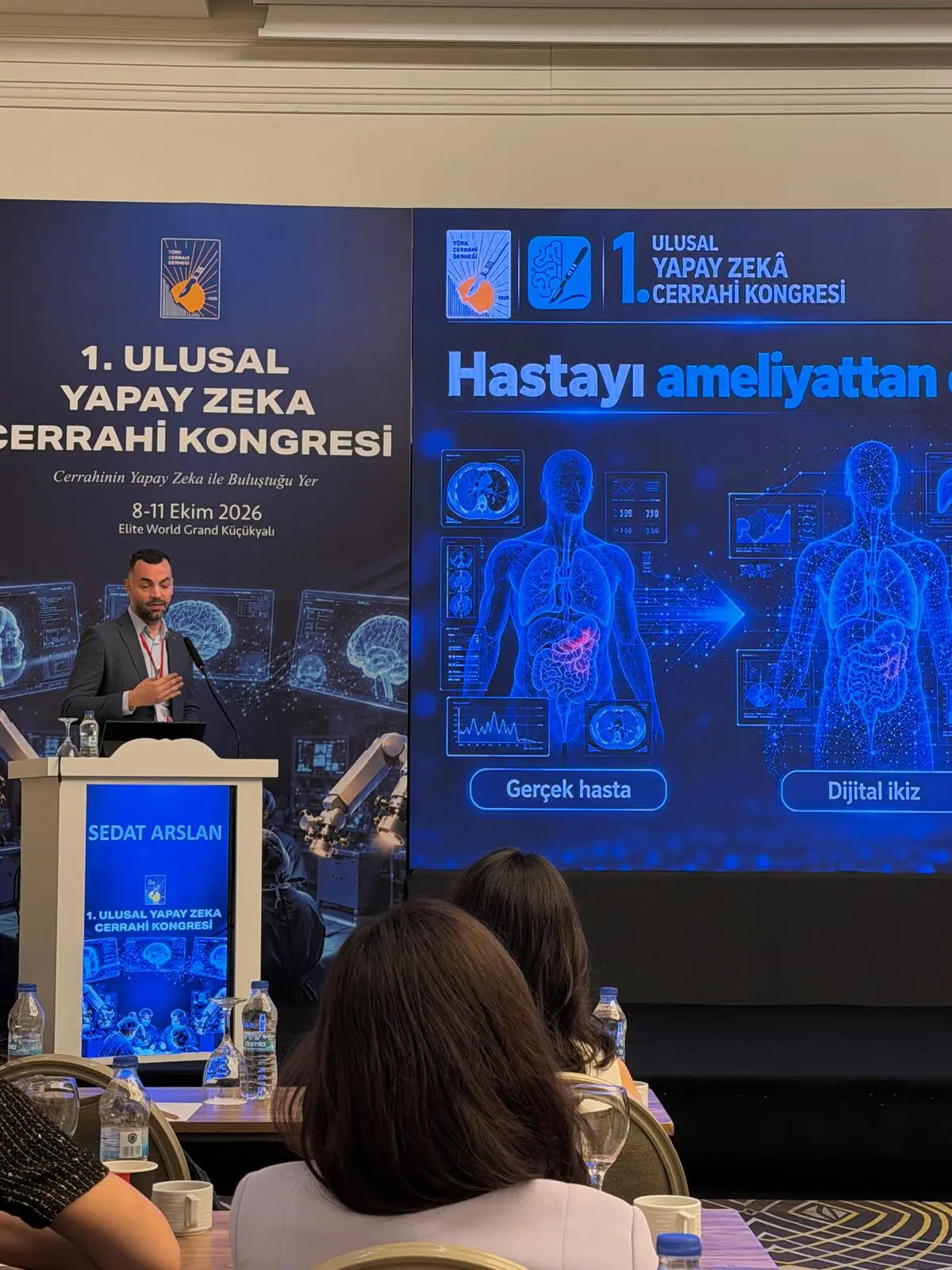
Could we create a digital model that reflects a patient’s anatomy, physiology, and metabolism, then examine treatment scenarios before a real intervention? This question sits at the centre of the transformation promised by digital-twin technologies in health.
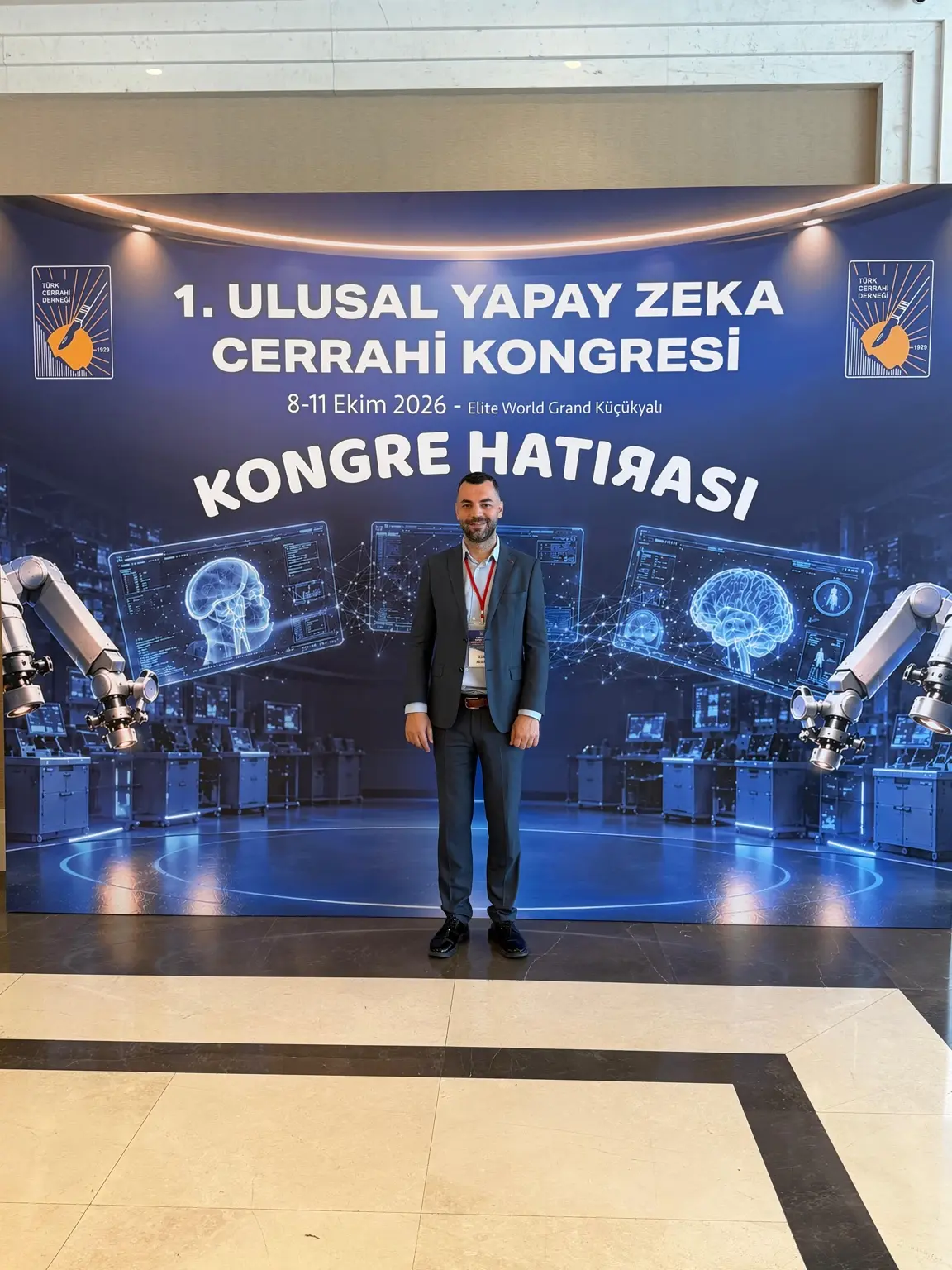
I was pleased to speak at the 1st National AI Surgery Congress, organised under the umbrella of the Turkish Surgical Association in Istanbul on 8–11 October 2026. My talk explored what a digital twin is, how it can be informed by layered patient data, and under which conditions it may contribute to clinical decisions.
What is a digital twin?
In healthcare, a digital twin can be understood not as a static copy of a real patient, but as a computational representation that may be updated with imaging, laboratory, physiological, lifestyle, and treatment data. Its purpose is to examine the possible consequences of an intervention that has not yet been performed and to compare alternative strategies.
Potential applications range from evaluating anatomy and comparing operative scenarios in surgical planning to personalised treatment and metabolic-response modelling. In clinical nutrition, one important research direction is whether individual responses to different energy, protein, or nutrition-support strategies can be modelled with sufficient reliability.
Decision support—not a replacement for judgment
One of the most compelling possibilities is a shift from describing a patient’s current state to estimating individual outcomes under different interventions. A digital model, however, does not replace clinical experience or shared decision-making with the patient. If properly validated, it may serve as decision support by making uncertainty and alternative pathways more visible.
Reaching that point requires external validation with real patient data, monitoring for bias, and evidence that predictions translate into clinically meaningful outcomes. Data security, privacy, interoperability across institutions, and responsibility when a prediction is wrong are equally important challenges.
Digital twins are therefore not yet a ready-made clinical solution for every patient. They remain a rapidly developing field of research and validation. Their value will ultimately depend less on how impressive a simulation looks and more on whether it supports safer, explainable, and better clinical decisions.
Where surgery meets other disciplines
Türkiye’s first national congress devoted to artificial intelligence in surgery provided a valuable setting for colleagues from different disciplines to discuss not only technical capacity but also clinical relevance. I thank the Turkish Surgical Association, everyone who contributed to the organisation, and all colleagues who joined the session.
More information about my work in artificial intelligence, digital health, and nutrition is available through the research areas and academic profiles. Other invited talks are listed on the speaking and events page.