News · Invited talk
Discussing the Future of AI in Nutrition Education and Patient Follow-up at Hacettepe
At the XII International Nutrition and Dietetics Congress, I discussed how AI may support nutrition education and continuity of follow-up—and why safe use still requires dietitian oversight.
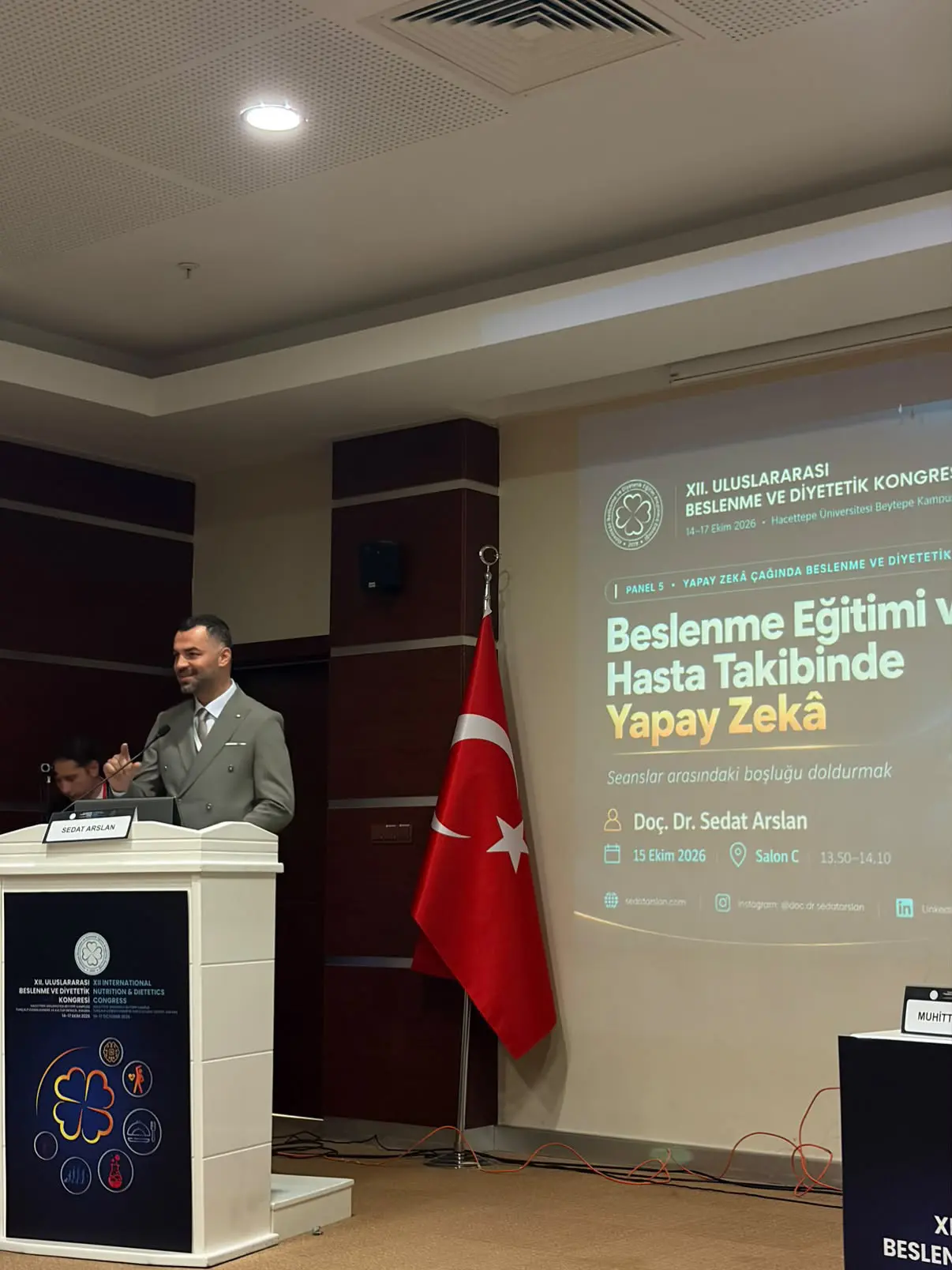
Can artificial intelligence help bridge the interval between two appointments with a dietitian? The talk focused not on replacing the professional, but on how technology may extend education and follow-up within a sound clinical framework.
I was pleased to speak at the XII International Nutrition and Dietetics Congress, hosted by Hacettepe University on 14–17 October 2026. On 15 October, I delivered the invited talk “Artificial Intelligence in Nutrition Education and Patient Follow-up” during the panel “Nutrition and Dietetics in the Age of Artificial Intelligence: Opportunities, Limitations, and the Future.” The scientific programme brought clinical decision-making, patient education, and medical ethics into the same session.
Bridging the interval between appointments
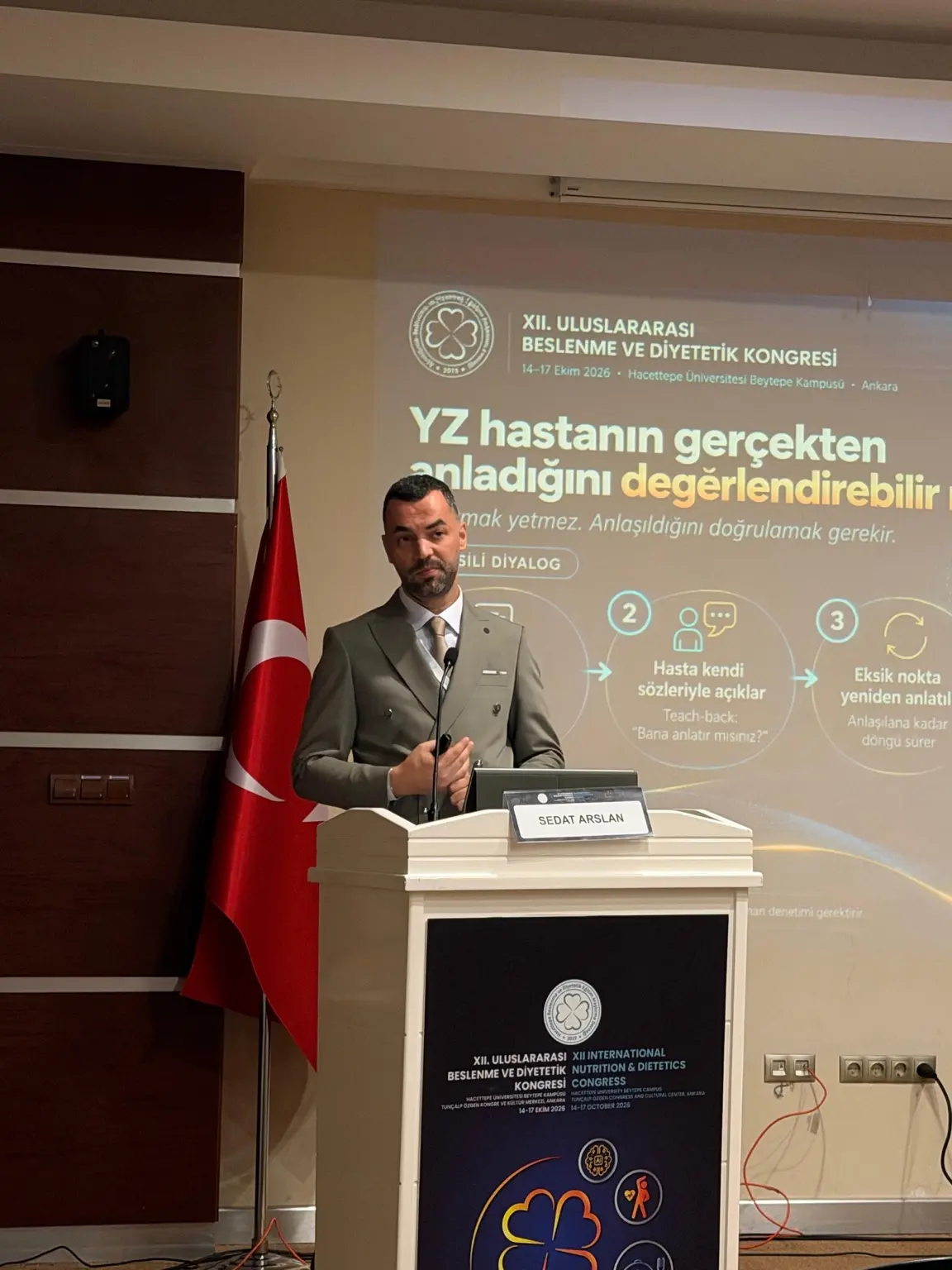
Nutrition education is more than transmitting correct information. The same recommendation must be translated into language that reflects a person’s age, health literacy, daily life, and cultural context. AI may help adapt dietitian-defined goals to different literacy levels, support teach-back conversations, and provide reminders or self-monitoring support between visits. Behaviour change, however, does not result from generating messages alone: trust, motivation, and the person’s circumstances remain central to care.
Food images and diet plans: opportunities and limitations
I also drew on our co-authored research. Our pilot study of energy and macronutrient estimation from meal photographs shows why image-based assessment may be useful while uncertainty must be considered as meals become more complex. Our analysis of plans based on popular online diet trends examined nutritional composition and consistency, while a guideline-based comparison tested three language models on simulated diabetes profiles. Together, they reinforce a practical point: a fluent and personalised-looking output is not proof that it is nutritionally accurate or aligned with clinical guidance.
Keeping AI within a clinical framework
AI tools should not disconnect the assessment, diagnosis, intervention, and monitoring stages of the Nutrition Care Process. Health-data security, traceable sources, the risk of reinforcing restrictive language in people vulnerable to eating disorders, and timely detection of unsafe advice must be considered from the start. Technology should support—not replace—the dietitian’s clinical reasoning, within professional boundaries and regular oversight. Clinical effectiveness must also be studied separately for each use case and patient group.
Different perspectives in the same scientific session
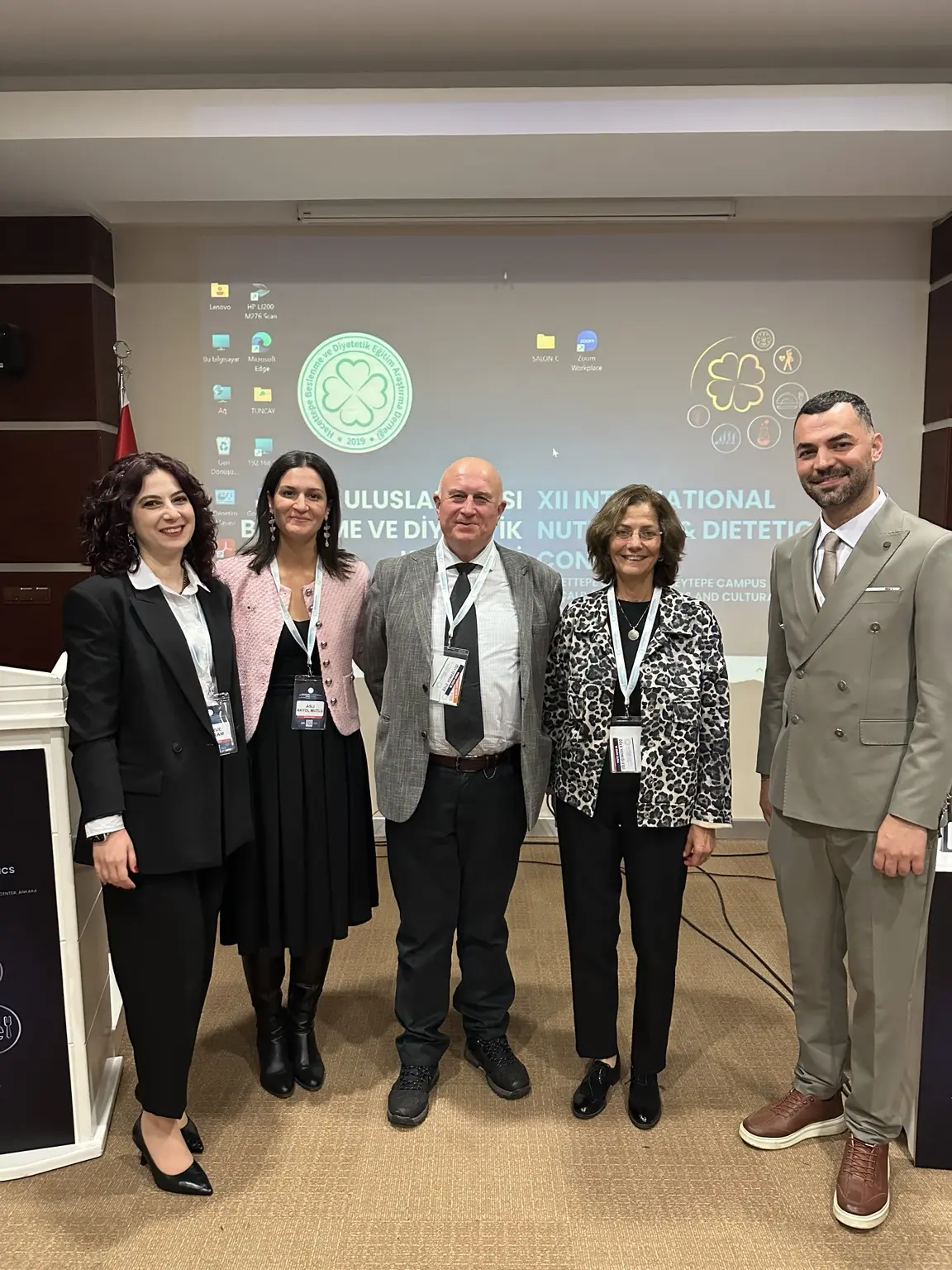
I was especially pleased to share the session with Prof. Aslı Akyol Mutlu, Head of Hacettepe University’s Department of Nutrition and Dietetics. Discussing clinical opportunities alongside responsibility, privacy, and regulation made the session particularly valuable. I thank the congress organisers and all colleagues who attended the talk.
Other invited talks are listed on the Speaking and Events page, while my related work is available under Research Areas.