News · Invited talk
Sedat Arslan Discussed the Future of AI and Clinical Intuition in Obesity and Metabolic Surgery
The congress talk examined the relationship between algorithmic decision support and clinical intuition grounded in experience, evidence, and the individual patient’s context.
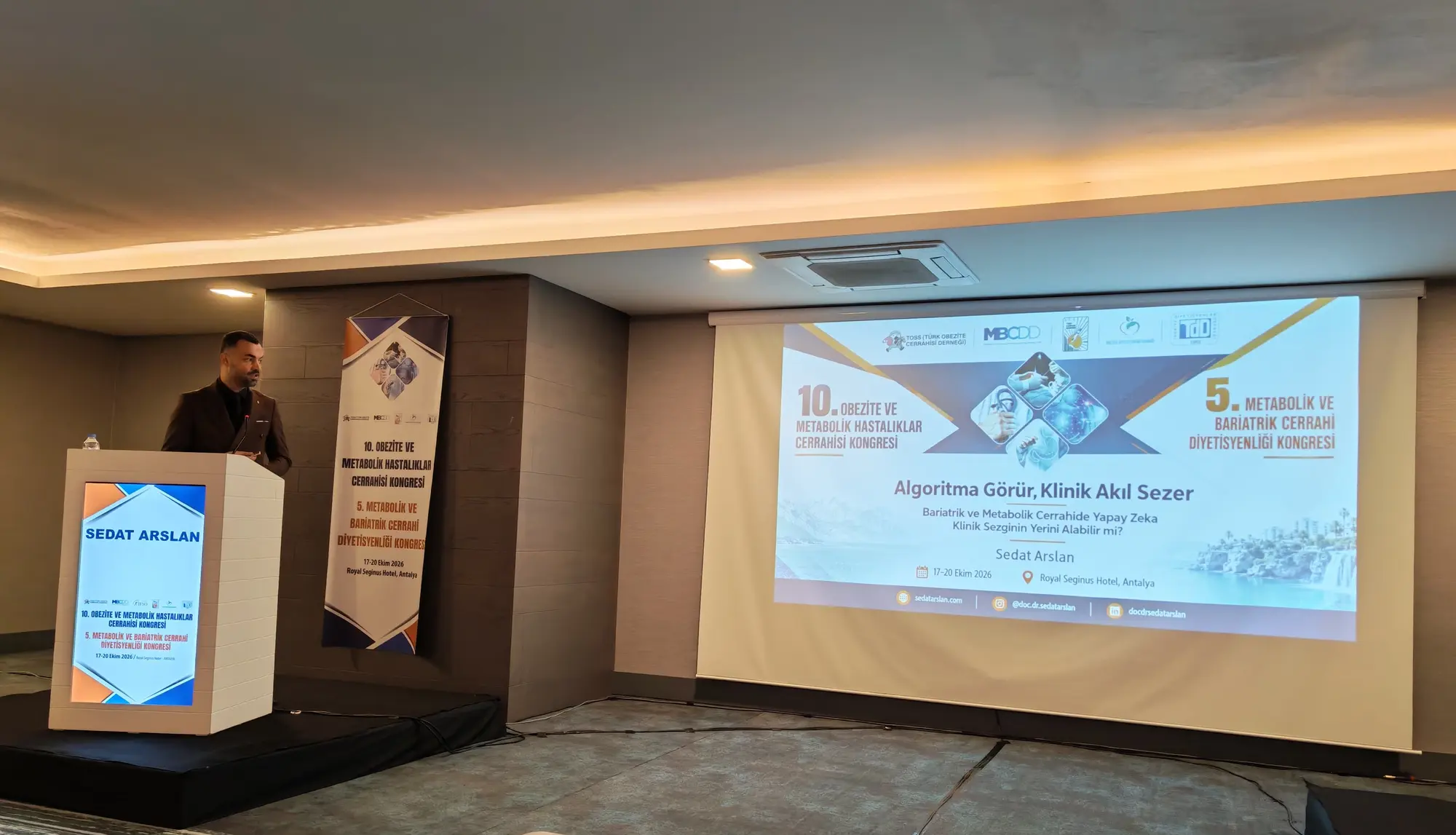
Assoc. Prof. Sedat Arslan of Bursa Uludağ University’s Department of Nutrition and Dietetics discussed how artificial intelligence may support decisions in obesity and metabolic surgery—and where its limits must remain clear.
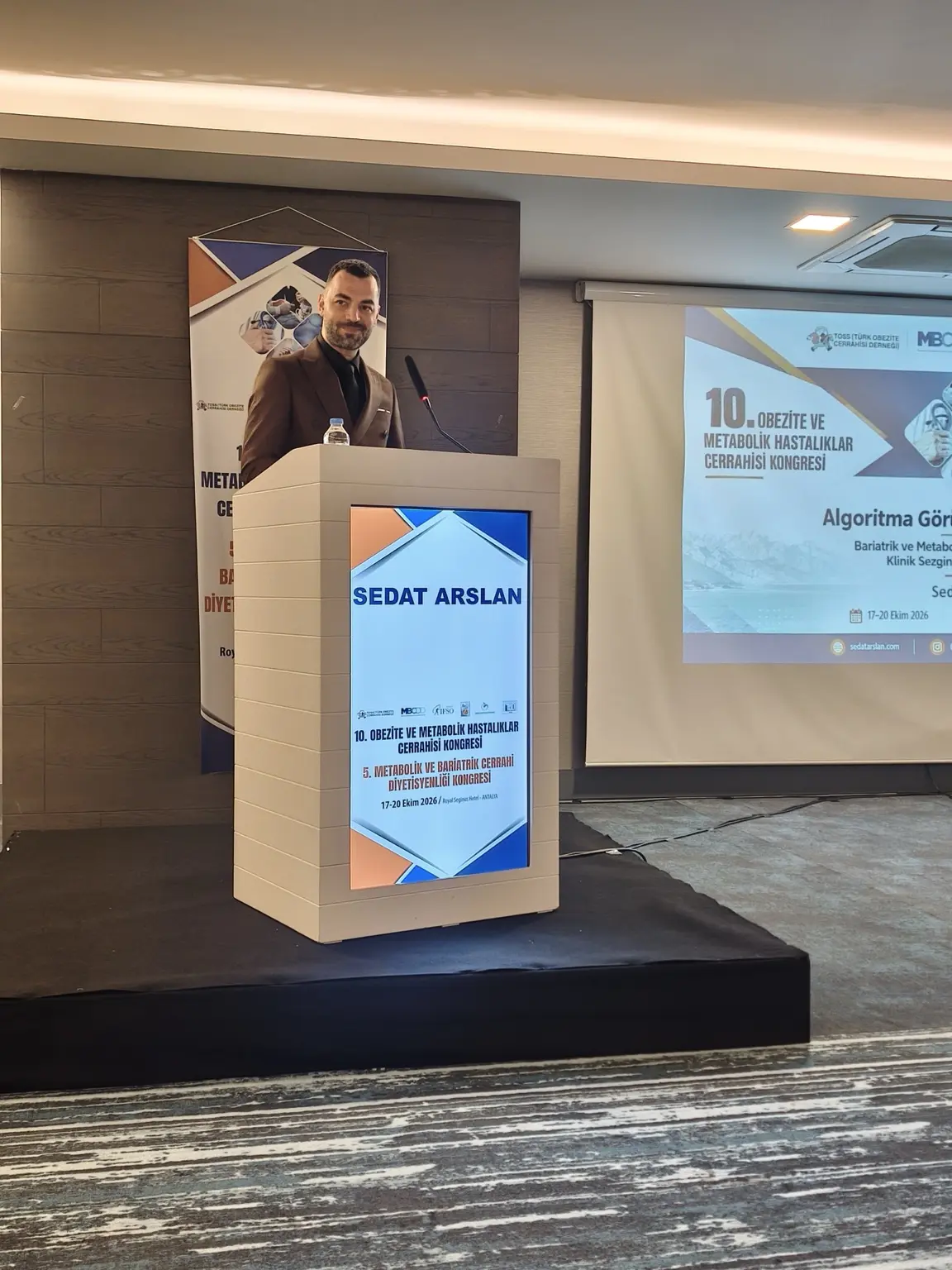
The 10th Obesity and Metabolic Diseases Surgery Congress and the 5th Metabolic and Bariatric Surgery Dietetics Congress were held together at the Royal Seginus Hotel in Antalya on 17–20 October 2026. Arslan spoke in Hall C on 18 October during the “Genetics–Epigenetics–Artificial Intelligence” session. His 15:30–15:45 presentation was titled “The Algorithm Sees, the Clinical Mind Senses: Can Artificial Intelligence Replace Clinical Intuition in Bariatric and Metabolic Surgery?” The date, time, and session details are listed in the congress official scientific programme.
What the algorithm sees—and the clinical mind senses
The talk considered AI applications in patient assessment, risk prediction, clinical decision support, nutrition management, and postoperative follow-up. Systems that identify recurring patterns across large datasets may help clinicians recognise complication risks, nutrition problems, or disengagement from follow-up earlier. Clinical intuition, however, is not simply instinct. It emerges from experience, pattern recognition, scientific evidence, and interpretation of the patient’s medical, behavioural, and social context.
Clinical goals beyond weight loss
Success after bariatric and metabolic surgery is not defined by weight loss alone. Preserving muscle mass, meeting protein and micronutrient needs, nutrition adherence, behaviour change, and long-term follow-up are integral to clinical outcomes. AI-supported tools may organise records, make warning signs more visible, and maintain monitoring between dietitian appointments. An algorithmic recommendation loses clinical meaning, however, if it is not interpreted alongside the procedure, laboratory findings, comorbidities, medication, eating behaviour, and living conditions.
The boundary between decision support and responsibility
The presentation also addressed incomplete or incorrect AI advice, loss of clinical context, and the false confidence that fluent outputs may create. A rapid answer is not necessarily a clinically correct answer. Data quality, external validation, visible uncertainty, and professional oversight therefore remain essential safeguards.
The concluding message was that AI does not eliminate clinical intuition. With scientific validation, transparency, and professional oversight, it can support clinical decisions. Other invited talks are listed on the Speaking and Events page. Related articles address data privacy in AI-assisted nutrition and AI-generated personalised nutrition plans.